
Exercising Before Surgery
Increasing your fitness level before surgery will improve your recovery. We recommend the following eight exercises to begin with now and continue until your surgery. You should be able to do them in 15 to 20 minutes, and it is recommended that you do all of them three times every day. It is not harmful to do more. Consider this a minimum amount of exercise prior to surgery.
Also, remember that you need to strengthen your entire body, not just your legs. It is very important to strengthen your arms by doing chair push-ups because you will need your arms to help you get in and out of bed, in and out of a chair, walk, and do your exercises after surgery. If you have shoulder problems, discuss this with your surgeon or therapist. Stop doing any exercise that is too painful. Do not hold your breath during exercise.
Pre-Surgery Knee and Hip Exercise Plan
| 1. Ankle pumps | 15 reps, three times every day |
| 2. Quad sets | 15 reps, three times every day |
| 3. Gluteus sets | 15 reps, three times every day |
| 4. Abduction and adduction (slide leg out and in) | 15 reps, three times every day |
| 5. Heel slides | 15 reps, three times every day |
| 6. Arm chair pushups | 15 reps, three times every day |
| 7. Straight leg raise | 15 reps, three times every day |
| 8. Standing heel and toe raises | 15 reps, three times every day |
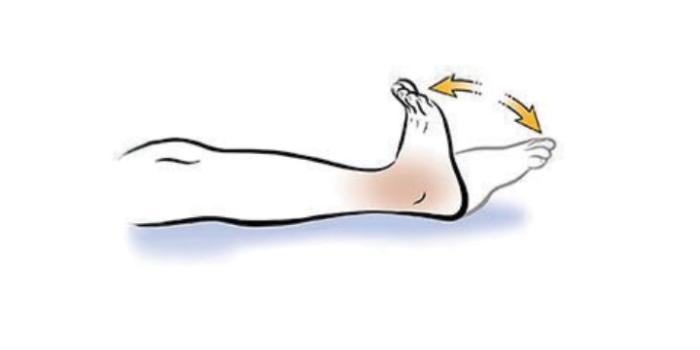
1. Ankle Pumps
Move ankle up and down with legs outstretched. Point your toes down and then pull them back.
Repeat 15 times.
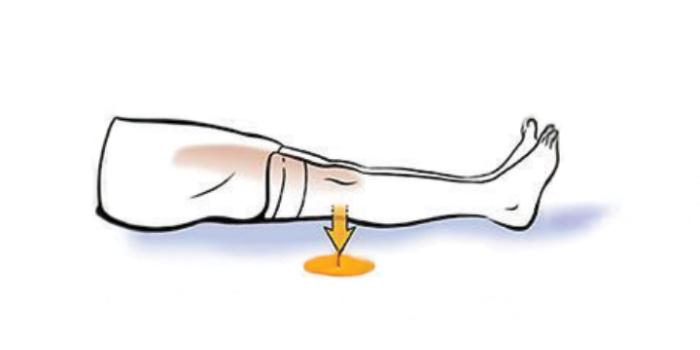
2. Quad Sets
Lie on back, pillow under head. Press knee into bed while tightening the muscles on the front of the thigh. Do not hold your breath.
Repeat 15 times.
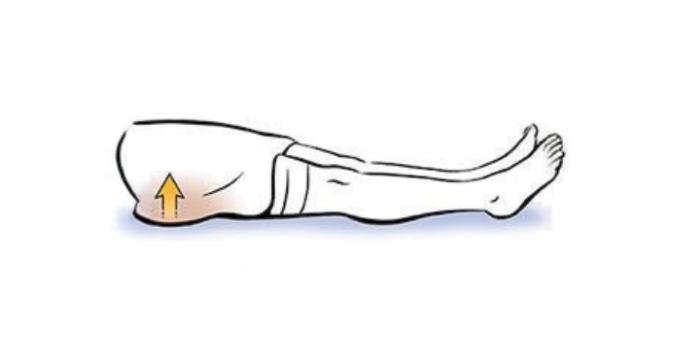
3. Gluteus Sets
Lie on your back with legs outstretched. Squeeze bottom together and hold for 5 seconds. Do not hold your breath.
Repeat 15 times.
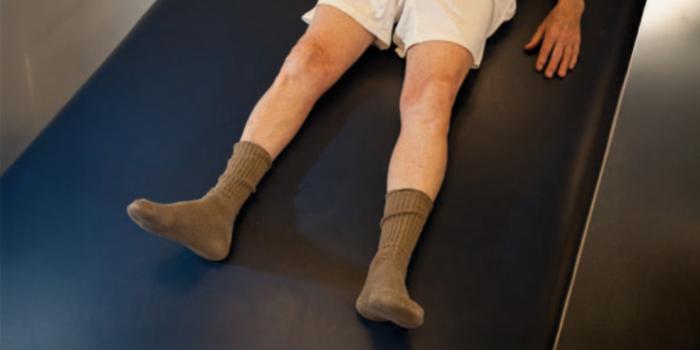
4. Hip Abduction and Adduction
Lie on back and slide legs out to side. Keep toes pointed up and knees straight. Slide legs back to starting point.
Repeat 15 times.
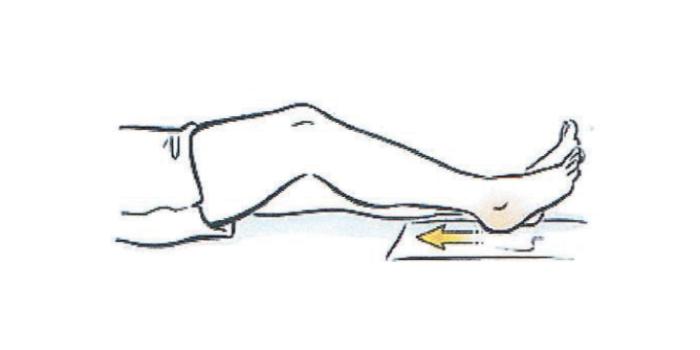
5. Heel Slides
Lie on back with one leg outstretched. Bend other knee with foot flat. Slowly bend straight leg and slide heel toward bottom. Slide heel away to slowly lower leg to starting point.
Repeat 15 times.
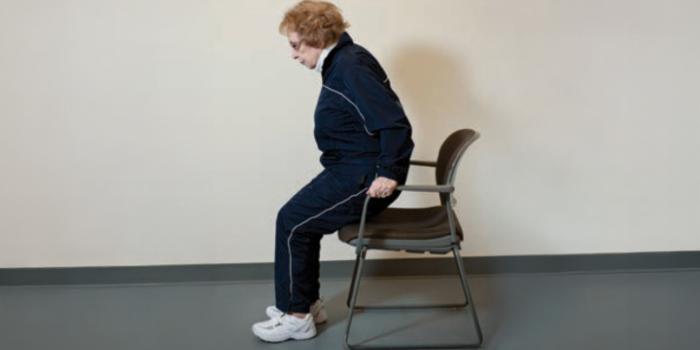
6. Armchair Pushups
Sit in a chair with arms. Place feet flat on floor. Grip the arm rests and use your arms to list your bottom off the chair. If necessary, you may use your legs to help. Hold position for one second before lowering back to the chair.
Repeat 15 times.
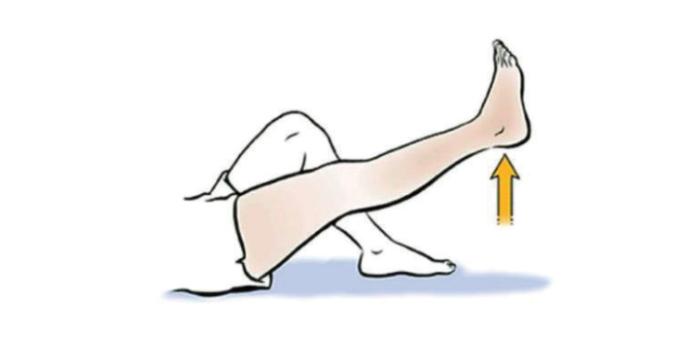
7. Straight Leg Raise
Lie on back, non-operative leg bent and foot flat. Lift your straight leg up 12 inches. Keep knee straight and toes pointed up. Slowly lower leg. Relax.
Repeat 15 times.
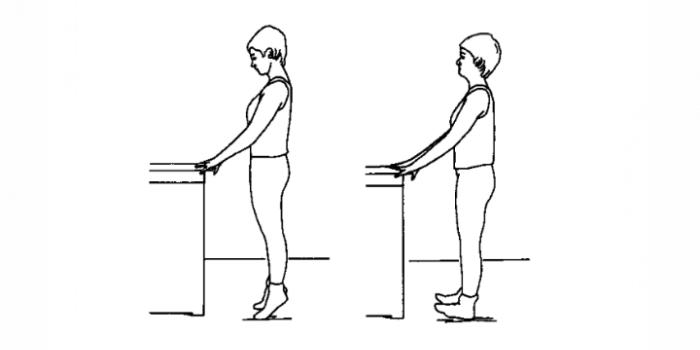
8. Standing Heel and Toe Raises
Stand at a counter or table for balance and support.
Raise heels off the floor by going up on toes while keeping knees straight. Slowly lower heels back to starting point. Repeat 15 times.
Next, raise toes off the floor by going back on heels. Slowly lower toes back to starting point. Repeat 15 times.
Exercising After Surgery
To make it easier, try to get in and out of bed on the opposite side as the operated leg.
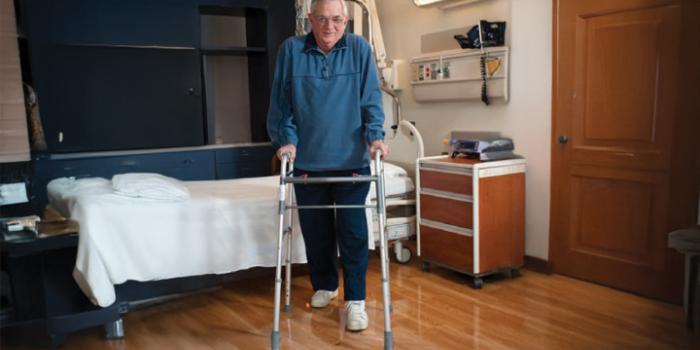
How to Use Your Walker
To maintain weight bearing status or comfort, move walker first. Step halfway into the walker with operated leg. Next step with non-operated leg into the walker.
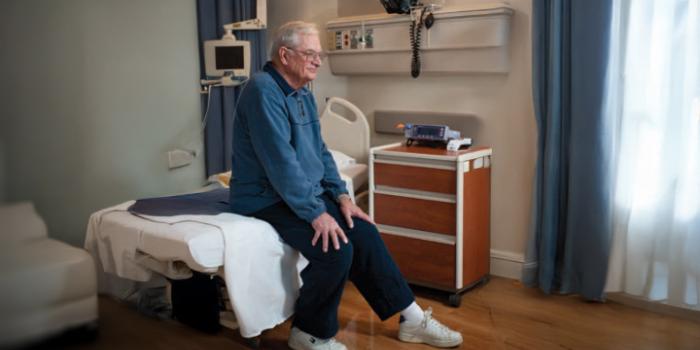
Sit to Stand Transfer
Move to edge of bed or chair and place feet on floor. Place hands on knees and push with both hands and lean forward to stand up.
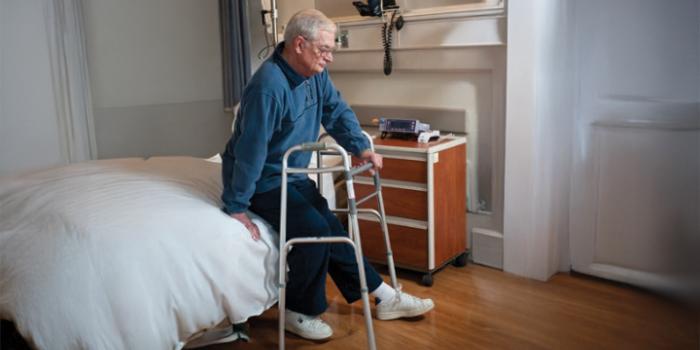
Stand to Sit Transfer
Place legs against sitting location. Reach back with hand on arm of chair or bed. Next, reach back with other hand and begin to sit.
Optional tip: placing operated leg forward while standing eases transfers and can support pain control.
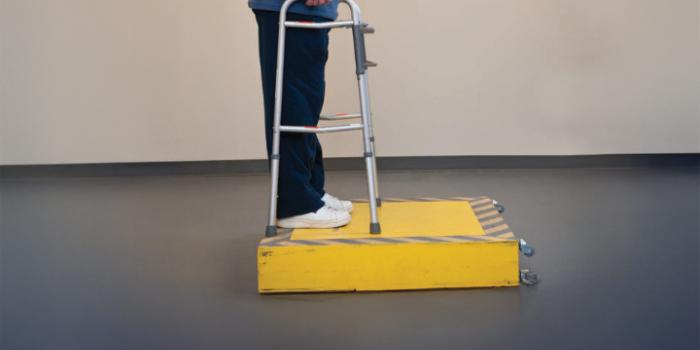
Going Up Curbs
Place walker on curb first, making sure all four legs are solid on curb. Step up with non-operated leg. Next, lean on walker and step up with operated leg.
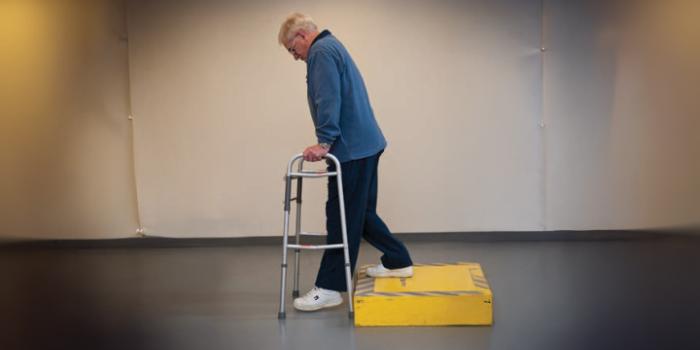
Going Down Curbs
Place walker down, making sure your feet are close to the edge of the curb. Step down with operated leg first, followed by the non-operated leg.
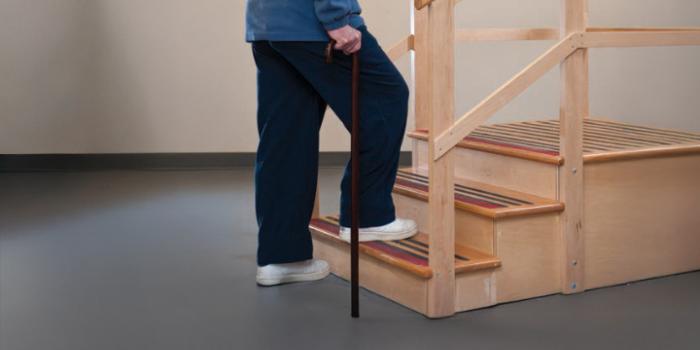
Going Up Stairs
Place hand on railing and maintain a good grip. Step up with non-operated leg first, then step up with operated leg and bring cane to step.
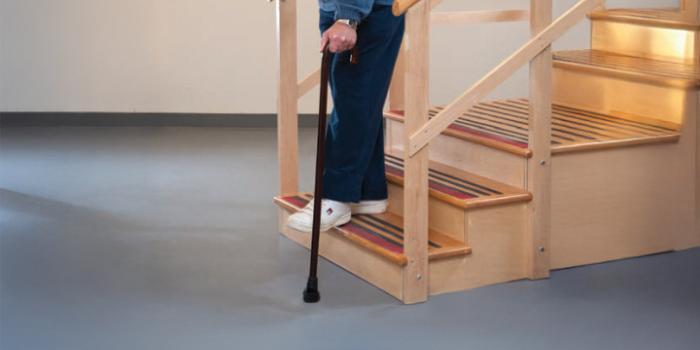
Going Down Stairs
Place hand on railing and maintain a good grip. Place cane on lower step first, then step down with operated leg. Next, step down with the non-operated leg.
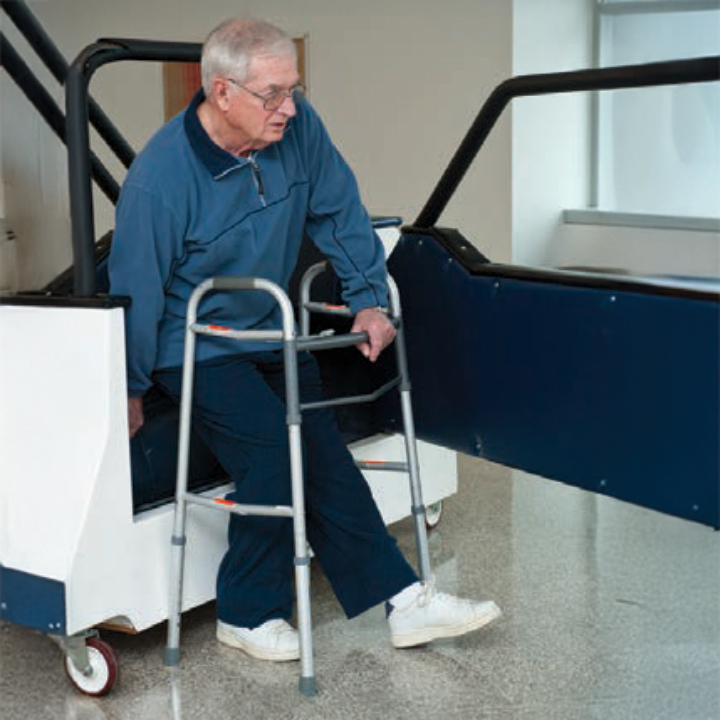
Car Transfer
- Push car seat all the way back and recline it.
- Place a trash bag on the car seat to assist with sliding around to turn forward.
- Back up to the car it can be felt on the back of legs.
- Reaching back for the car seat, lower into a sitting position.
- Scoot back into the seat and torn forward to lift legs into the car.